

Connection is one of the most powerful forces in healing. When people struggling with mental health challenges gather in a supportive environment, something remarkable happens—shared experiences become bridges to hope, and vulnerability transforms into strength. Group therapy creates this sacred space where individuals realize they are not alone in their struggles, and structured activities serve as the framework that makes these transformations possible.
Thoughtfully designed group therapy activities do more than fill session time. They catalyze trust-building, teach practical coping skills, and create opportunities for therapeutic breakthroughs that might take months to achieve in individual counseling alone. From residential treatment centers in St. Louis to virtual IOP sessions reaching clients across Missouri, these evidence-based exercises help adults build the emotional resilience and interpersonal skills essential for lasting recovery.
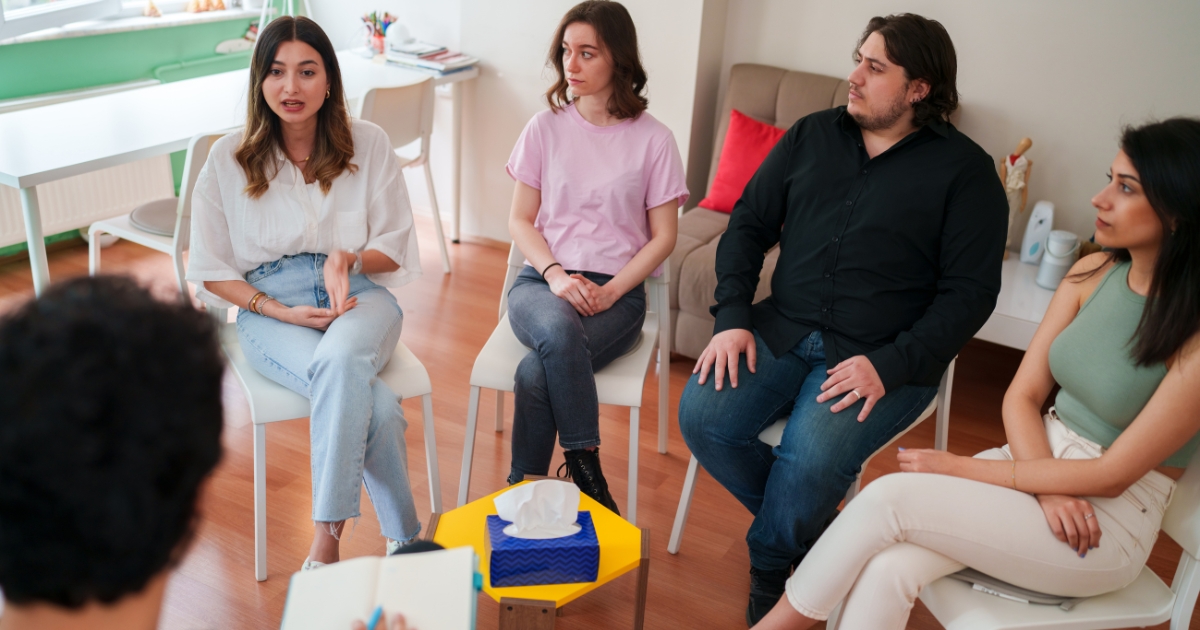
Why Structured Group Therapy Activities Accelerate Healing
Walking into a room full of strangers and sharing your deepest struggles feels intimidating. Structured group therapy exercises for mental health reduce this initial anxiety by giving participants a clear focus and shared purpose. When everyone engages in the same activity, the spotlight shifts from individual performance to collective experience. This psychological safety allows authentic connection to emerge organically.
For facilitators, structured formats provide essential scaffolding for managing group dynamics. A well-chosen activity gives the therapist tools to redirect unhelpful patterns, highlight therapeutic themes, and ensure quieter members have opportunities to contribute. Meanwhile, the activity’s framework prevents sessions from becoming unproductive venting circles while still allowing space for genuine emotional processing.
Evidence-Based Therapeutic Group Activities for Adults and Recovery
Research consistently demonstrates that specific therapeutic group activities for adults produce measurable improvements in symptoms, coping skills, and treatment engagement. These evidence-based interventions fall into several categories, each serving distinct therapeutic purposes while building on one another as treatment progresses.
| Activity Category | Primary Therapeutic Goal | Best Treatment Phase |
|---|---|---|
| Trust-Building Exercises | Establish safety and group cohesion | Early engagement (weeks 1-2) |
| Emotional Regulation Activities | Develop distress tolerance skills | Active treatment (weeks 2-6) |
| Cognitive Restructuring Exercises | Challenge unhelpful thought patterns | Mid-treatment (weeks 3-8) |
| Relapse Prevention Activities | Build sustainable recovery skills | Discharge preparation (final 2-4 weeks) |
Cognitive restructuring activities help participants identify and challenge distorted thinking patterns that fuel depression and anxiety. “Thought Record” exercises, “Cognitive Distortion Bingo,” and role-playing scenarios where members practice reframing negative self-talk align with CBT principles.
When considering what effective group therapy interventions are, relapse prevention activities deserve special attention for their role in sustaining recovery.
Key evidence-based activities include:
- Feelings Charades: Members act out emotions without words while others guess, building emotional literacy and reducing shame around difficult feelings
- Gratitude Circles: Structured sharing of three things each person feels grateful for, which activates positive neural pathways and counters negativity bias common in depression
- Goal-Setting Workshops: Collaborative exercises where members help each other develop SMART goals and identify obstacles, fostering accountability and mutual support
- Mindfulness Body Scan: Guided meditation practiced as a group that teaches present-moment awareness and reduces anxiety through somatic attention
- Values Clarification Exercises: Activities helping participants identify core values and examine whether current behaviors align with what matters most to them
- Communication Skills Practice: Role-playing difficult conversations using “I statements” and active listening techniques essential for healthy relationships
Trauma-informed group exercises require special consideration. Activities must never re-traumatize participants through forced disclosure or physical contact without explicit consent. Effective approaches include “Container Visualization” where members imagine a safe place to store distressing memories, “Grounding Techniques Practice” that helps individuals stay present when triggered, and “Strength Spotting” exercises.
Adapting Activities for Virtual Group Therapy Ideas for Telehealth
The expansion of telehealth has sparked creative virtual group therapy ideas for telehealth platforms, with many traditional exercises translating remarkably well through thoughtful adaptation. “Show and Tell” exercises where members share meaningful objects from their homes work beautifully on video and often feel less intimidating than in-person sharing. “Chat-Based Check-Ins” where participants type responses simultaneously before verbal discussion can increase participation from quieter members. Virtual formats do present challenges—activities requiring physical movement need creative solutions, and facilitators must be more directive about turn-taking.
Implementing Group Counseling Techniques Across Treatment Phases
Matching activity intensity and complexity to where participants are in their treatment journey is essential for effective facilitation. Mastering group counseling techniques involves understanding not just what activities to use, but when and how to deploy them for maximum therapeutic impact. Effective facilitation requires reading group readiness and adjusting in real time—a core skill in how to facilitate group therapy sessions successfully. Early in residential or intensive outpatient treatment, when trust remains fragile and symptoms may be acute, simpler structured exercises with clear instructions work best. As group cohesion strengthens and members develop greater emotional capacity, facilitators can introduce more challenging activities that require deeper vulnerability and interpersonal risk-taking.
In partial hospitalization programs where participants attend daily, the progression might span just two to three weeks. An effective sequence begins with name games and low-risk sharing exercises in week one, moves to emotion identification and basic coping skills practice in week two, then advances to cognitive restructuring and interpersonal feedback exercises by week three.
Intensive outpatient programs typically run six to twelve weeks, allowing more gradual skill development. Final sessions emphasize relapse prevention through activities that help participants anticipate challenges and develop wellness plans.
| Treatment Phase | Primary Focus | Example Activities |
|---|---|---|
| Initial Engagement | Building safety and rapport | Name games, group agreements, hopes and fears sharing |
| Skill Acquisition | Teaching coping strategies | Mindfulness practice, thought records, emotion regulation exercises |
| Skill Consolidation | Practicing in challenging scenarios | Role-plays, interpersonal feedback, values clarification |
| Transition Planning | Preparing for ongoing recovery | Relapse prevention planning, support network mapping, goodbye letters |
Beyond sequencing activities across time, effective facilitators also tailor exercises to specific clinical populations. For individuals living with depression, collaborative art projects, gratitude exercises, and behavioral activation planning prove especially valuable. Those struggling with anxiety disorders benefit from exposure-based activities done gradually in the supportive group context.
Groups serving individuals with trauma histories require particular sensitivity. Physical activities need explicit consent protocols. The facilitator must watch for signs of dissociation or hyperarousal and have grounding techniques readily available.
Find Compassionate Group Therapy at St. Louis Mental Health
Healing happens in connection, and structured group therapy activities provide the pathway for that connection to flourish. At St. Louis Mental Health, our licensed clinicians integrate evidence-based exercises into comprehensive treatment programs designed for adults facing mental health challenges. Whether you’re seeking residential care at our pet-friendly facility in St. Louis, intensive outpatient support, or virtual IOP services accessible throughout Missouri—including Kansas City, Springfield, Columbia, and Jefferson City—our clinical team brings expertise in facilitating therapeutic groups that build trust, teach practical skills, and create lasting change.
We understand that reaching out for help takes courage. Our compassionate team is available 24/7 to answer your questions and provide confidential support. With same-day admissions available and most major insurance plans accepted, starting your recovery journey is more accessible than you might think. Call us at (314) 237-4435 or visit our Contact Us page to schedule a consultation and learn how our programming can support your path to wellness. You don’t have to face mental health challenges alone—healing is possible, and it starts with connection.
FAQs
The following are the most frequently asked questions regarding group therapy.
1. What makes group therapy activities effective for mental health treatment?
Structured activities create safe containers for vulnerability while teaching practical coping skills through experiential learning. The combination of peer support, professional guidance, and hands-on practice accelerates insight and behavior change in ways individual therapy alone cannot achieve.
2. How do therapists choose appropriate group therapy exercises for different populations?
Clinicians assess multiple factors including diagnosis, trauma history, group cohesion level, treatment phase, and therapeutic goals when selecting activities. Activities are matched to participants’ current emotional regulation capacity and modified based on real-time group dynamics and individual needs. A skilled facilitator continuously reads the room and adjusts plans to ensure activities remain therapeutic rather than overwhelming or superficial.
3. Can group therapy activities work effectively in virtual or telehealth settings?
Yes—many evidence-based exercises translate well to video platforms with thoughtful adaptation. Virtual formats may require shorter activities, clearer instructions, and creative use of chat features or breakout rooms to maintain engagement. Research demonstrates comparable therapeutic outcomes when facilitators skillfully manage the technology and adjust their approach to the online environment.
4. What types of group therapy activities help with mental health recovery?
Coping skills practice, emotional trigger identification, stress management exercises, and accountability-building activities prove especially valuable for individuals working on their mental health. Activities that strengthen peer support networks and practice real-world scenarios—like role-playing responses to difficult social situations or mapping high-stress triggers—help participants develop sustainable coping skills they can use beyond treatment. The group format provides natural opportunities to witness others’ progress and learn from their experiences.
5. How long should group therapy activities take during treatment sessions?
Most structured activities run fifteen to thirty minutes, allowing adequate time for setup, participation, and crucial processing discussion afterward. The debriefing conversation often holds the deepest therapeutic value, as members reflect on what the exercise brought up emotionally and how it connects to their personal recovery goals. Facilitators balance activity time with reflection periods to ensure experiences translate into lasting insight and behavior change.